Although SH 2-63 was originally cataloged in 1959 as an emission nebula, is has virtually no Ha and is actually a reflection nebula.
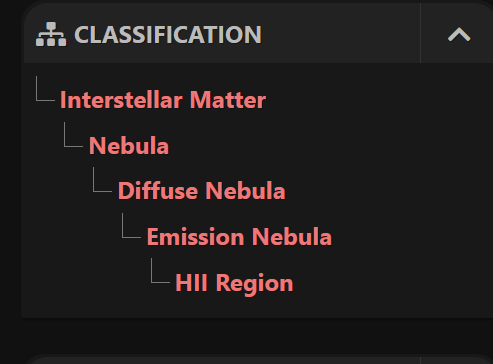
Sh 2-63 is primarily a reflection nebula / illuminated molecular cloud (dust), rather than an emission nebula.
While Stewart Sharpless cataloged it in 1959 under the assumption that it was an H II (emission) region—like the rest of the Sharpless catalog—modern imaging and spectroscopy have shown that it is not an ionized H II region:
-
Composition: Sh 2-63 (also cataloged as LBN 86, and associated with high-latitude molecular clouds MBM 158 / MBM 159) consists almost entirely of interstellar dust and molecular gas.
-
Filter Response: It has virtually no detectable $H\alpha$ emission. Narrowband dual-band or $H\alpha$ filters will show little to no signal.
-
Imaging Strategy: Because it shines via scattered starlight (reflection and faint galactic cirrus/IFN-like dust), it is best shot using broadband LRGB under dark skies rather than narrowband filters.